

Since childhood as a traveller to many parts of this beautiful world, I have been observing that not only in India but in other places as well we share only success stories and hide the failures and at times we never even acknowledge our failures. It seems to be a social stigma not to include or give one more chance to that experience or the person who has failed and endup not bringing out the worthiness of the entire experience and the learning it brings. It’s vital to make every effort to succeed but failure doesn’t simply mean ‘unsuccessful’, it unfolds various gaps and areas of improvement and if read well actually increases your chances for success. Well understood Failures many a times lead to a better success than the original success being targeted. Its indeed an under-rated, under-valued, over-hated and over feared teacher.
Question is about our perspectives:-
I look at every experience as a Life Scientist and failure as one of the outcomes which is about Experimenting, accepting and learning from that experience about what’s missing and what’s not working.
Sharing a personal experience, I remember that initially when I had jumped into the ocean of imparting external workshops and was asked to deliver a short marketing & sales pitch for prospects of a premier and reputed global organization, I had to try and create an experience for my audience to listen, see, feel, imagine and do Design Thinking in that short time of 60 minutes. The audience was from diverse organizations wherein they were performing diverse roles.
I had prepared my ‘best content’ including everything I could based on my assumption that what they would like to experience. Instead of planning to ask my audience what they were looking for, I began with an assumption based mindset.
During the session, I needed them to experience failure and involved them in a challenging activity to get a relatively unexpected outcome. One of the purpose was to realize that we are used to see success only and failure is hidden, never ever discussed or acknowledged. I was trying to make them embrace and learn from failure which would require a complete shift in mindset.
Result was an Audience feedback that revealed that I was fast, rushing and the content was lot more than they could absorb. To add to it all, there were technical glitches that impacted the focus of the audience. The feedback was my biggest inspiration and challenged me to look at the experience differently.
While introspecting, I realized I had missed one essential thing i.e. the culture and belief which these people brought with them i.e. fear of failure
I looked at it from their eyes i.e. from where they were coming from, I chatted with few of them on what went wrong, what was missing, what could be done differently to create a wow experience. It was hard but I tried to empathize with my audience after the delivery, I tried to understand what kind of mindset they had and what would be needed to be done in future.
For the next time, this learning pushed me to do one thing I could do before I design an intervention i.e. empathise and strive hard to identify their unmet needs and expectations, which is quite a challenge itself. The experience inspired me to accept it as a challenge to embrace the value of it and go further.
How do we see failure? As a learning or an experiment or giving up or failure as us.

As Tom Kelley writes in his book Creative Confidence, “Creative people simply do more experiments. Early failure can be crucial to success in innovation. Because the faster you find weaknesses during an innovation cycle, the faster you can improve what needs fixing.”
My friend Billiana Vassileva, founder of the Swiss Failure+ Akademy in Switzerland. Her academy is where one would discover their power to fail and continue thriving, helping action-biased leaders to handle the unexpected, and in particular to find freedom from the fear of failure. She is a social innovation coach and consultant and her thoughts are “How you think when it matters most! Creating and working in a culture that appreciates and builds upon failures, makes all the difference between failing and succeeding.”
Many Failure conferences have come up in Silicon Valley to get rid of the belief to fear failure and hide the failure.
In an attempt to bring a different perspective for you all to see these experiences arising out of failure differently, and to see how we too could form a more unbiased, and broad approach towards failures, I have some facts to share.
Get inspired from failures too!
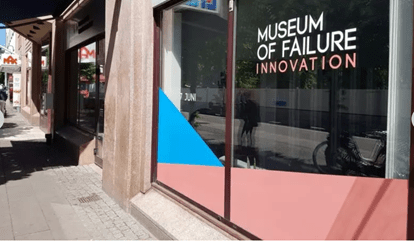
As Inspiration doesn’t come only from success it also comes from failure too! The Museum of Failure in Sweden has more than 100 failed products and services from some of the world’s best-known companies.
Hritihik Roshan, Bollywood actor, in the last week brunch interview wishes for his children “For Ray and Ridz I wish they make many many mistakes and have many failures, cause then I’will know they are truly challenging themselves to better their best” (Ref HT-Brunch, 22 Dec’19).
At Organization level as we embrace innovation:-Do people feel comfortable taking risks and experimenting with new ideas?
As Venture capitalist Randy Komisar says that what distinguish between pockets of entrepreneurship like Silicon Valley is not their successes but the way they deal with failure. In cultures that encourage entrepreneurs, there is a greater appreciation and understanding of what Komisar calls “constructive failure.”
Bessemer Venture Partners is a well-respected, hundred-year-old venture capital firm that has gotten in on the ground floor of some stellar growth companies. Their website predictably features their “Top Exits” catalog of miscues and failed foresight Bessemer calls their “Anti-Portfolio.” stories of missed opportunities and failures. Bessemer’s Anti-Portfolio is part of a trend among enlightened individuals and organizations who want to shine a bright light on their mistakes and learn from that dispassionate observation. The Forbes Midas List ranks Cowan among the top venture capitalists in the world for turning startup investments into gold. Could the owning up to his failures have cleared the path for his out-sized success?
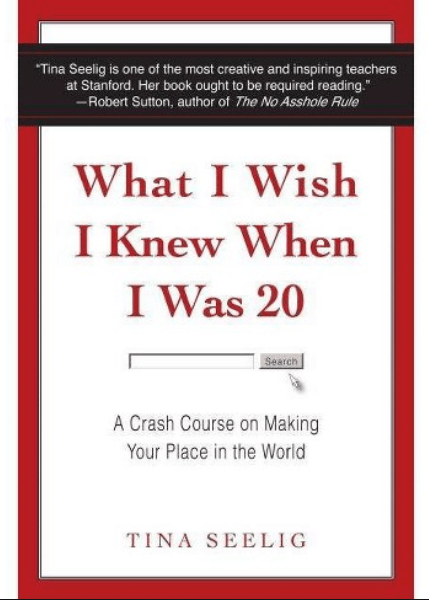
Author and educator Tina Seelig asks her students to write a “failure résumé” that highlights their biggest defeats and screw-ups. She says that smart people accustomed to promoting their successes find it very challenging. In the process of compiling their failure résumé, however, they come to own their setbacks, both emotionally and intellectually.“Viewing their experiences through the lens of failure forces them to come to terms with the mistakes they have made along the way,” Tina writes in her book ‘What I Wish I Knew When I Was 20’. She is brave enough to include her own failure résumé, pointing out missteps such as not paying attention to company culture early in her career and avoiding conflicts in personal relationships. Now more aware and open about her early shortcomings, Tina is not held back by them. She was the Executive Director of the Stanford Technology Ventures Program, nurturing tomorrow’s entrepreneurial leaders.
We have to aim for success but we need to embrace failures.
Time of the year to celebrate failures too! Unleash Courage! Do more experiments and embrace the result as not the only option but a learning experience and go further!
 Gauri Mohan